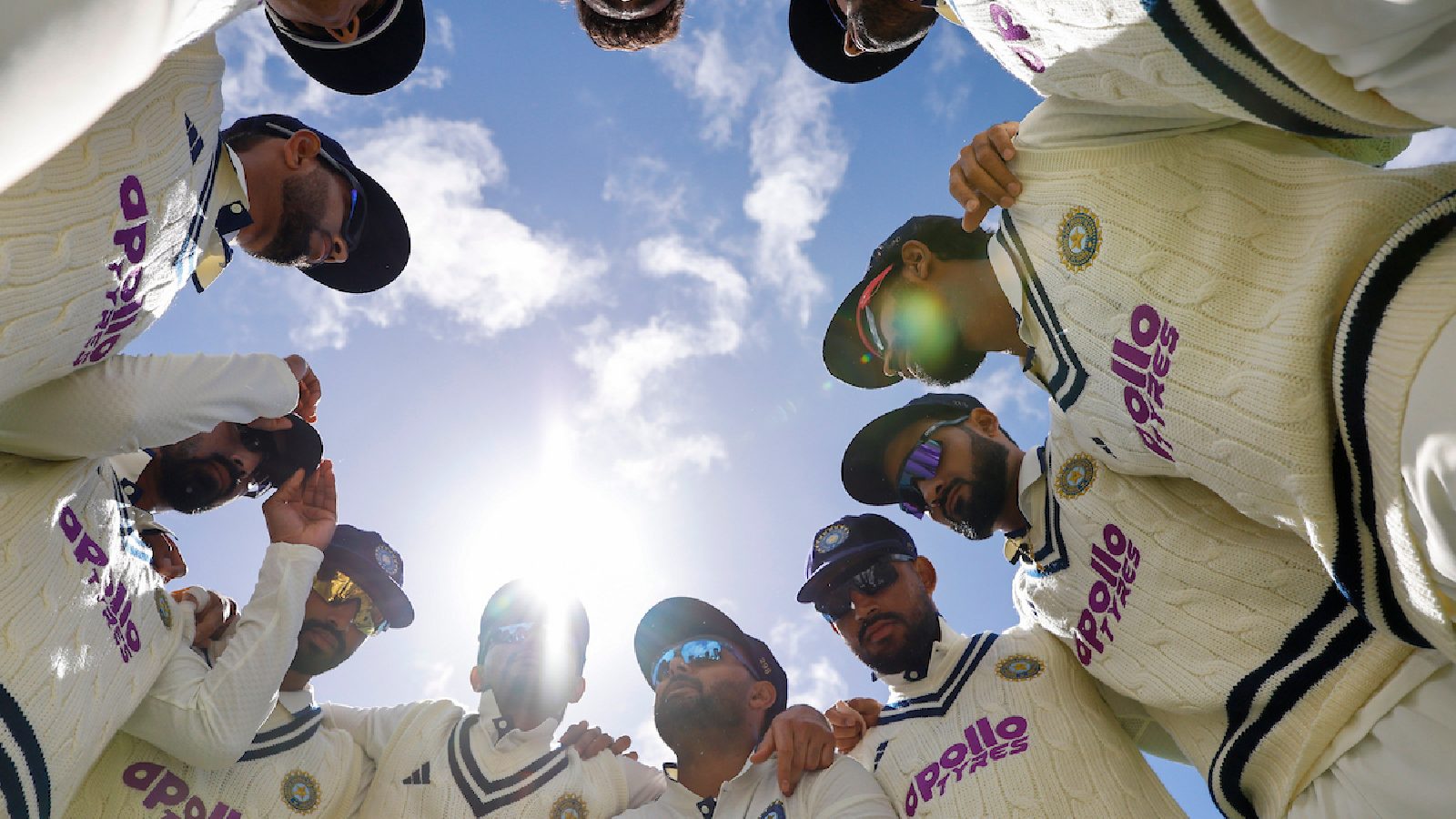
Shubman Gill’s Challenge
Not all hope is lost for Shubman Gill. He can still do what his decorated predecessors — Virat Kohli and Rohit Sharma — have not, by leading India to their maiden WTC title and essentially completing the set. For that to happen, however, India must be faultless in their six remaining Tests, starting Friday at Christchurch.
It is hope that must be killing Shubman Gill. The hope that the door to World Test Championship (WTC) finale is ajar; that he could hold the holy mace that crushed the heart of his predecessors Virat Kohli and Rohit Sharma; that he could breathe the rarefied air of iconic captains; that he would be immortalised as the first Indian captain to taste the WTC sweetness and complete India’s set of ICC Trophies.
Maybe, had India not lost at least one of their two successive WTC final appearances, the longing would not have burned like an obsession as it is now. Maybe, had Gill been as dismissive of WTCs as the retired Ben Stokes, who called WTC mechanism “utterly confusing”, he would have felt lighter when he leads his brigade into the Hagley Oval, the first of six must-win Tests, each with a potential to kill his hope and dream.
The Pressure of Expectations
It is still premature to pass judgments on his captaincy, but it feels inevitable that the definitive legacy of Gill hinges on whether his team would be crowned the champions of the longest format. In another year’s time, he has a shot at winning the 50-over World Cup. But that could be all about, if they are around, the farewell lap of Sharma and Kohli. WTC is Gill’s lease to be loved unconditionally, like Sachin Tendulkar and Kohli in the modern era of Indian cricket.
Epic bilateral series would certainly be celebrated, but not winning WTC would leave the audience with a bitter aftertaste. The quip would be: “the five-course luncheon was grand, but the dessert spoiled it”. In a different era, a drawn first Test of a series outside Asia, least of all in New Zealand, would have been viewed satisfyingly. Not any longer.
Shared spoils was condemned in Wellington because India lost valuable points and the percentages dropped significantly on the championship table. Similarly, in a different time, Kohli’s gladiators would have been classified as India’s finest-ever Test side. But they lost the final in Southampton, leaving Kohli’s conquerors without a crowning glory. Had they won, perhaps Kohli could still have been leading India. The course of history is thus charted by wins and defeats of great leaders.
Until the elusive feat is achieved, every Indian captain will have to bear this cross. Gill is not alone in this pursuit. Head coach Gautam Gambhir needs red-ball salvation himself. His horrific resume reads series defeats to New Zealand and South Africa at home, a hard-fought draw in England, a battering in Australia, series wins over bottom-dwellers Sri Lanka and Afghanistan. He needs a favourable streak of results to overturn the perceptions of his Test-match incompatibility. If India fail to nail a spot in the final, the decision makers could even contemplate picking a separate coach for Tests.
Key to Success in Christchurch
Time is ticking along fast for Gambhir and Gill; time will almost stop if India lose or draw in Christchurch. The stakes, and thus the pressure, to win has only intensified. The scrutiny on tactics and team selection would be suffocating. A minor stumble or stutter could be mercilessly scavenged and exaggerated to an unhealthy plane, if India lose. He has intermittently betrayed signs of losing his temper. Captaincy can break even hearts made of stone.
On the final day in Wellington, he was uncharacteristically agitated. Clumsy fielders and erring bowlers bore his ire. He was irrationally defensive, where he had the cushion to attack. After all, a captain and team chasing desperate points have no other alternative but to attack.
The Christchurch Test, thus, connects multiple threads in Gill’s narrative. It would offer insights into how well he could negotiate a crisis, how effectively he could rally his troops and inspire, how proactively he responds to a must-win situation, how he could guide his team in presumably different conditions to Wellington, and whether he can strike the perfect balance between attacking and defending.
The pitch and conditions would pose unique challenges of their own. The Hagley Oval deck could be quicker and bouncier, as it had been historically. It’s often a result wicket — only two of the 15 matches have ended in draws. Intriguingly, the last one was. West Indies, chasing 531, piled up 457/6. Runs flowed in India A’s fixture against New Zealand last month too. Matt Henry tapped into local knowhow: “It’s a good batting venue. Obviously, when there’s bounce involved, it’s good for the bowler, but from a batting point of view you can score runs quickly as well,” he said. “There are moments where you probably have to rely on your defence a little bit, but when you get through those periods, you really can put bowlers under pressure because, when it flattens out, your margins become pretty small as a bowler.”
Irrespective of how the surface plays out, Gill’s men have to grab full points, bolster their percentages and extend. He can longer dwell on the game’s variables, on the pitch or the ball. It’s time he transformed the flickering hope into raging belief.